


Hong Kong and Singapore compete for wealth hub
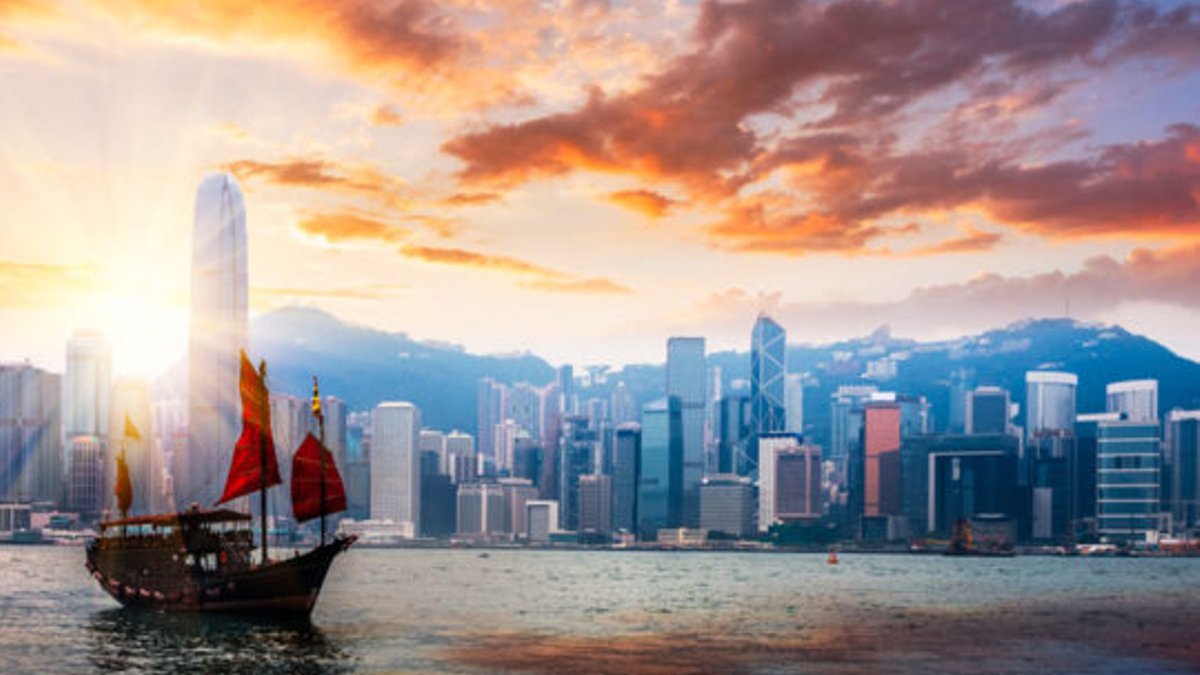
According to Bloomberg Intelligence, Hong Kong and Singapore are competing to become the world’s fastest-growing cross-border wealth hubs, both poised to surpass Switzerland. These cities attract capital and talent during geopolitical instability, relying on a combination of quality of life, career opportunities, and proximity to global financial centers. Their success hinges on these factors.
The April 2026 Numbeo Quality of Life Index ranks Singapore ahead of Hong Kong, scoring 159.08 and 130.75, respectively. Singapore excels in purchasing power and lower pollution, while Hong Kong competes in safety and climate. Operating under Common Law, Hong Kong offers advantages for international contracts, and its regulatory approach increasingly aligns with Mainland China’s policy priorities.
The Foundations of Hong Kong’s Financial Markets
Hong Kong has established itself as one of Asia’s most liquid markets, maintaining Common Law under the ‘one country, two systems’ framework. It serves as an offshore RMB hub and a gateway to China, with the Hong Kong Exchanges and Clearing (HKEX) becoming a leading global listing venue. The city is experiencing a resurgence, with the ‘Top Talent Pass Scheme’ stabilizing its workforce through new talent inflows.
Singapore, meanwhile, leads in the family office sector, thanks to its 13O and 13U tax incentives, strong governance, and focus on green finance. These factors make it a preferred base for multi-generational wealth. Jeremy Cheng, Adjunct Assistant Professor at CUHK and Principal at Lansberg Gersick Advisors, notes that families are adopting a ‘Barbell Strategy’ in wealth management. This involves establishing a satellite office in a new jurisdiction and focusing on preservation through portfolio transformation.
The Global Financial Centres Index (GFCI) 39 report ranks Hong Kong first globally for fintech, driven by its AI readiness and integration with the Greater Bay Area (GBA) tech cluster. Nine in 10 Hong Kong financial institutions are deploying or piloting AI. Iain Bonner-Fomes, Chief Commercial Officer at KEY Smart Technologies, believes Singapore is ahead in this area, with its government forming strong partnerships with businesses.
As Singapore solidifies its position as Asia’s anchor of stability, Hong Kong is making a comeback. The focus is no longer on choosing one city over the other but on balancing both. Wong Joo Seng, Chairman of the Singapore International Chamber of Commerce (SICC), explains that Singapore serves as a global and regional base, while Hong Kong offers proximity, market understanding, and connectivity to Mainland China.
Related Post: Deep Tech Founders Urged to Prioritise Business Basics
The April 2026 partnership between the SICC and the Federation of Hong Kong Industries (FHKI) demonstrates this collaboration, creating pathways into the Greater Bay Area and leveraging Hong Kong’s role as a gateway to Mainland China. The Monetary Authority of Singapore (MAS) is proactive and transparent, with governance evolving from a back-office function to a strategic asset. Ken Ong, managing director at Morgan McKinley, Singapore, observes that compliance has become a core, resilient part of business.
Competition and Cooperation
Hong Kong and Singapore cater to different needs, shaped by geography, purpose, and alignment. Hong Kong remains the gateway for China-centric priorities, while Singapore is the gateway to ASEAN, attracting Southeast Asian flows and growing links to India and the Middle East. The latest GFCI results show minimal differences, with Professor Michael Mainelli, Chairman of Z/Yen Group, noting that sub-indices reveal differentiated excellence within a tightly packed elite.
Hong Kong’s momentum is evident across key indicators, with over 450 IPO applications in the pipeline, expected to surpass 2025 figures. The city recorded 5,221 start-ups in 2025, an 11 percent year-on-year increase. Maggie Ng, CEO of HSBC Hong Kong, highlighted the city’s resilience despite market instability. Large-scale events reinforce Hong Kong’s role as a superconnector between China and the world.
Cheng points out that high-growth capital is directed toward AI and biotech, where NextGen leaders see opportunities for returns and influence. Singapore prioritizes finance and trade, with centralized monetary regulation and a professionalized ecosystem for family offices. A generational shift is reshaping wealth management, with ESG and sustainability driving long-term outperformance.
Singapore moves more deliberately, with the Night Safari opening as Hong Kong’s markets close, and the Supertrees glowing in a measured sequence. These cities are not rivals but superhubs with distinct philosophies. Firms and investors benefit from handling both with precision. Google’s Asia-Pacific headquarters in Singapore employs nearly 3,000, and Dyson’s 2022 relocation of its global HQ from the UK to Singapore shows this trend.
Morgan McKinley’s 2026 Singapore Salary Guide highlights a shortage of skilled professionals, particularly in AI, data, cybersecurity, and sustainability. The seniority of roles is shifting, with more APAC Heads based in Singapore. Over the past two to three years, more headquarters have moved to Singapore, which is building a safe-haven model based on predictability and attracting senior decision-makers. As the city transitions into its nocturnal rhythm, trams hum past lit towers, and the Supertrees glow in sequence, with 35 percent of firms supporting AI upskilling to enhance long-term productivity.


