


Glass architecture pushes design boundaries
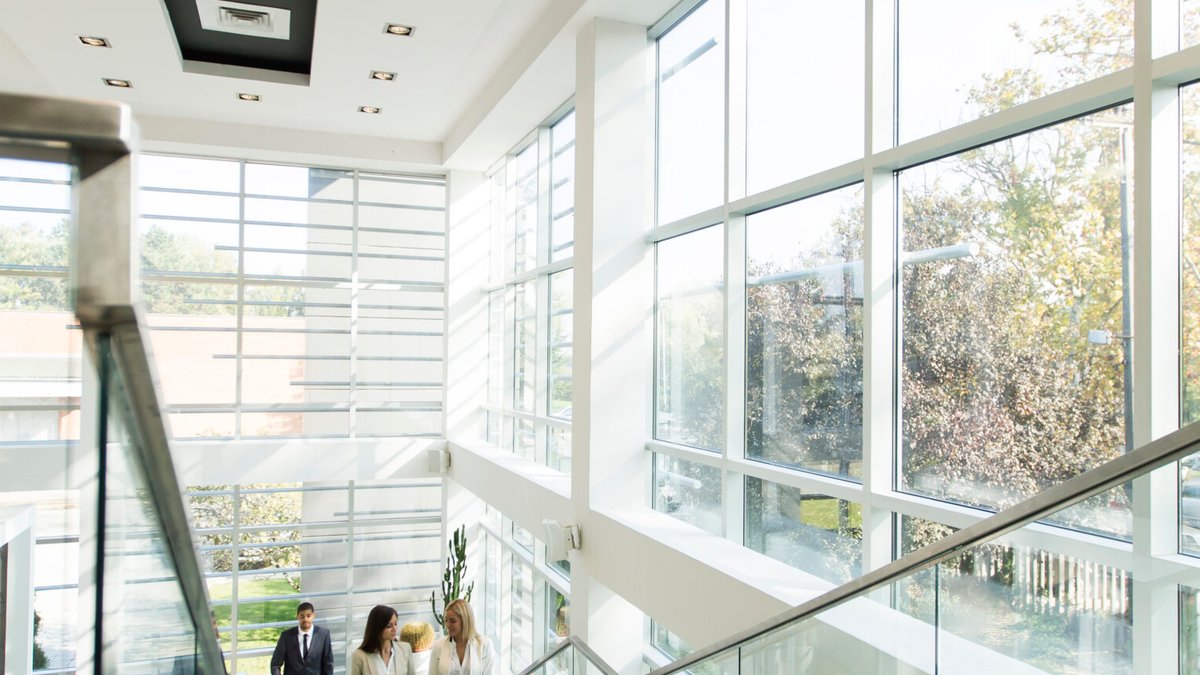
Glass is no longer just a window into a building. It now holds up floors, roofs, and entire facades—roles once reserved for steel and concrete.
From barrier to backbone
The shift is most visible in load-bearing applications. Glass beams, columns, and fins now support staircases, canopies, and multi-story atriums without traditional framing. These elements create spaces where walls and supports seem to disappear while still carrying real structural loads.
Engineers now calculate glass with the same rigor as steel. Load paths, redundancy, and failure modes are modeled before construction begins, treating the material as a true structural element rather than mere infill.
What holds it together
The real innovation isn’t the glass itself, but what’s between the panes. Advanced polymer interlayers have turned laminated glass from a safety feature into a structural asset. These layers distribute stress across multiple sheets, allowing broken panels to retain load-bearing capacity instead of collapsing.
This redundancy matters. If one layer cracks, the interlayer holds the assembly together, buying time for repairs. As these formulations improve, designers are pushing glass into more demanding roles.
Related: Tips for selecting ideal business decor
Most people won’t notice the interlayers, but they enable glass to span distances once thought impossible.
Digital tools unlock new shapes
Parametric modeling and finite element analysis let engineers simulate how glass will behave under wind, thermal stress, and seismic activity before fabrication. This precision reduces guesswork and allows for more ambitious designs.
Digital fabrication has kept pace. Curved, twisted, and freeform glass shapes that were once impractical to produce by hand are now common. The combination of simulation and fabrication has led to structures where glass bends without breaking, creating visual effects that were unimaginable a decade ago.
Glass that thinks
Structural glass is becoming smarter. Embedded sensors monitor stress, temperature, and micro-fractures in real time, feeding data into building management systems. Facility teams receive early warnings of potential issues long before cracks become visible.
Some systems include additional features. Electrochromic and thermochromic glass can adjust tint in response to sunlight, reducing the need for separate shading. This dual role—structural support plus environmental control—makes glass more useful in modern design.
The sensors are subtle. Most occupants won’t realize their glass staircase is reporting its own condition, but the data helps prevent failures before they happen.
Related: Do You Qualify for Innocent Spouse Tax Relief
A material under pressure
Sustainability concerns are reshaping how glass is used. Manufacturers are reducing the carbon footprint of production while improving thermal performance. Triple glazing, low-emissivity coatings, and better framing systems are making glass structures more energy-efficient over time.
Interest in circularity is also growing. Glass can be recycled indefinitely without degrading, and designers are exploring ways to incorporate recycled content into structural applications without compromising safety. The challenge lies in balancing performance with sustainability—stronger interlayers often require more energy to produce.
The trade-off is clear: the most advanced structural glass systems remain energy-intensive to manufacture. As demand increases, economies of scale may help reduce their environmental impact.
For architects, the appeal of structural glass goes beyond aesthetics. It offers a way to solve a fundamental tension in modern design—how to create openness without sacrificing strength. Buildings that once needed heavy steel frames for transparency now use glass itself as the primary support.
The result redefines what a building can be.

Tips for selecting ideal business decor


