


Alibaba shares rise on AI chip spinoff plan
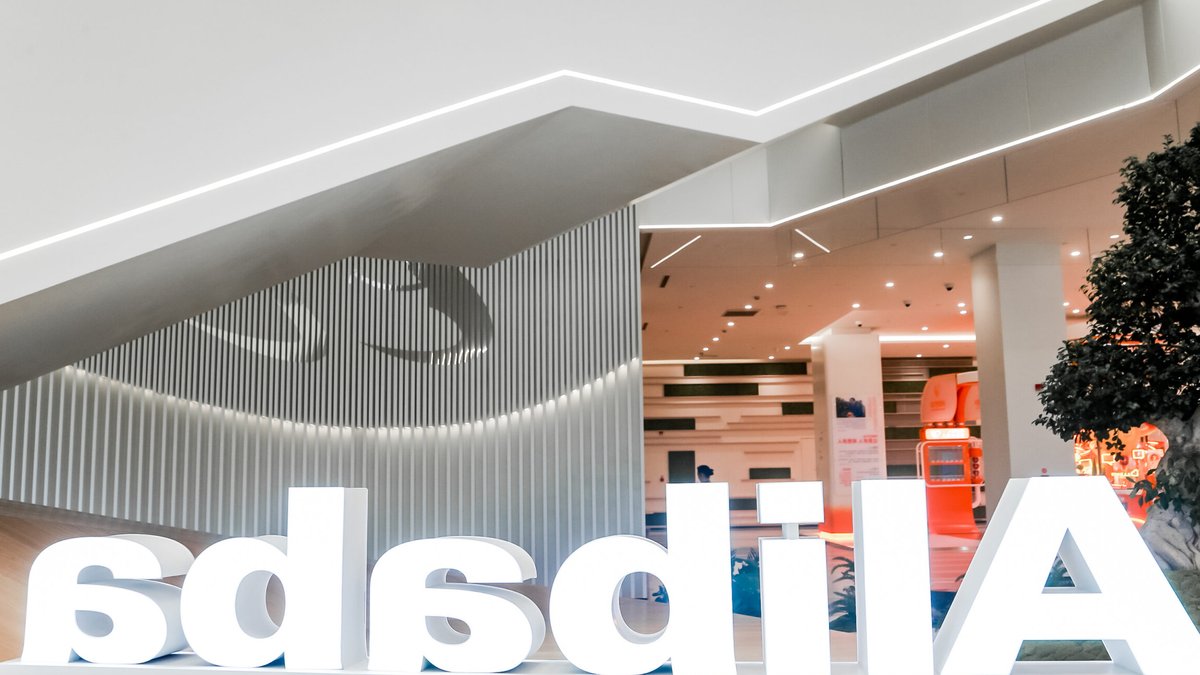
Alibaba stock surged on the New York Stock Exchange on Jan. 22, 2026, after market reports indicated the e-commerce giant was preparing to spin off its semiconductor arm, T-Head, also known as Pingtouge.
The shares rose sharply in morning trading, outperforming the broader tech index as investors reacted to the potential listing of the AI-focused chipmaker, a move that aligns with a broader trend among Chinese tech giants to capitalize on surging domestic AI demand.
Alibaba shares jump on T-Head IPO rumors
T-Head, which has long served as Alibaba’s internal silicon design shop, is being reorganized into an independent business with a share plan for its engineers, a strategy aimed at retaining top talent and aligning employee incentives with market performance.
CEO Eddie Wu, a key proponent of an “AI-first” strategy, stated that this restructuring will prepare the unit for an initial public offering, mirroring similar moves by other Chinese tech firms to transform internal chip projects into listed companies.
While Alibaba has not disclosed a final IPO timetable, filings suggest the offering could align with the January listing wave that has dominated Hong Kong and mainland exchanges this year, tapping into the “January boom” of tech listings.
T-Head’s push comes amid tightening U.S. export restrictions on high-end Nvidia accelerators, which have spurred Chinese customers to seek domestically produced alternatives, positioning T-Head as a frontrunner in the market.
The unit recently unveiled its Parallel Processing Unit (PPU), an AI accelerator aimed at large-scale inference workloads.
A contract with China’s second-largest wireless carrier to install Pingtouge accelerators in a new data center in northwestern China was announced last month, marking the first major commercial deployment of the chip and showing its market readiness.
Read Also: Tesla sales slump in Europe deepens
AI chip unit gains traction with new accelerator
Alibaba’s latest earnings report showed cloud revenue up 34% year-on-year in fiscal Q2 2026, accelerating from a 26% rise in the prior quarter, a surge management attributed to soaring demand for AI computing, including model training and enterprise AI services hosted on Alibaba Cloud.
The company said it has spent roughly 120 billion yuan on AI and cloud infrastructure over the past twelve months, and warned that its original three-year commitment of 380 billion yuan may need to be raised to keep pace with customer demand, highlighting the aggressive investment phase Alibaba is in to build long-term strategic value in AI technologies.
Alibaba claims it is already breaking even on AI spending in its e-commerce division, citing a 12% lift in advertising return on spend after deploying AI tools, according to vice president Kaifu Zhang, who noted this double-digit increase forecasts a “very significant positive impact” on the company’s Gross Merchandise Volume (GMV) during major shopping festivals.
Consumer AI hardware expands Alibaba’s ecosystem
November marked the market debut of two Quark AI glasses models, targeting Chinese shoppers eager for hands-free interaction, and positioning the devices as a visual portal to Alibaba’s AI and commerce services.
These devices support functions such as real-time translation, online purchasing, and visual payment verification via Alipay, integrating multiple Alibaba applications to become a primary traffic conduit for the company’s broader platform.
National policy reinforces domestic AI growth
China’s Ministry of Industry and Information Technology unveiled an action plan for high-quality development of industrial internet platforms covering 2026-2028, designed to bridge the gap between China’s massive industrial data and AI capabilities, supporting “new quality productive forces” across manufacturing sectors.
Simultaneously, China’s 15th Five-Year Plan (2026-2030) signals a strategic pivot from new innovation (“zero-to-one”) to widespread application and scaling (“one-to-100”), emphasizing the standardization and boosting of industrial internet platforms to secure supply chains and maintain manufacturing competitiveness amid global volatility.
Alibaba’s flagship AI ecosystem, Qwen (often referred to as Qianwen in China), has been mentioned as part of the company’s AI efforts.


