


Europe speeds up offshore wind development plans
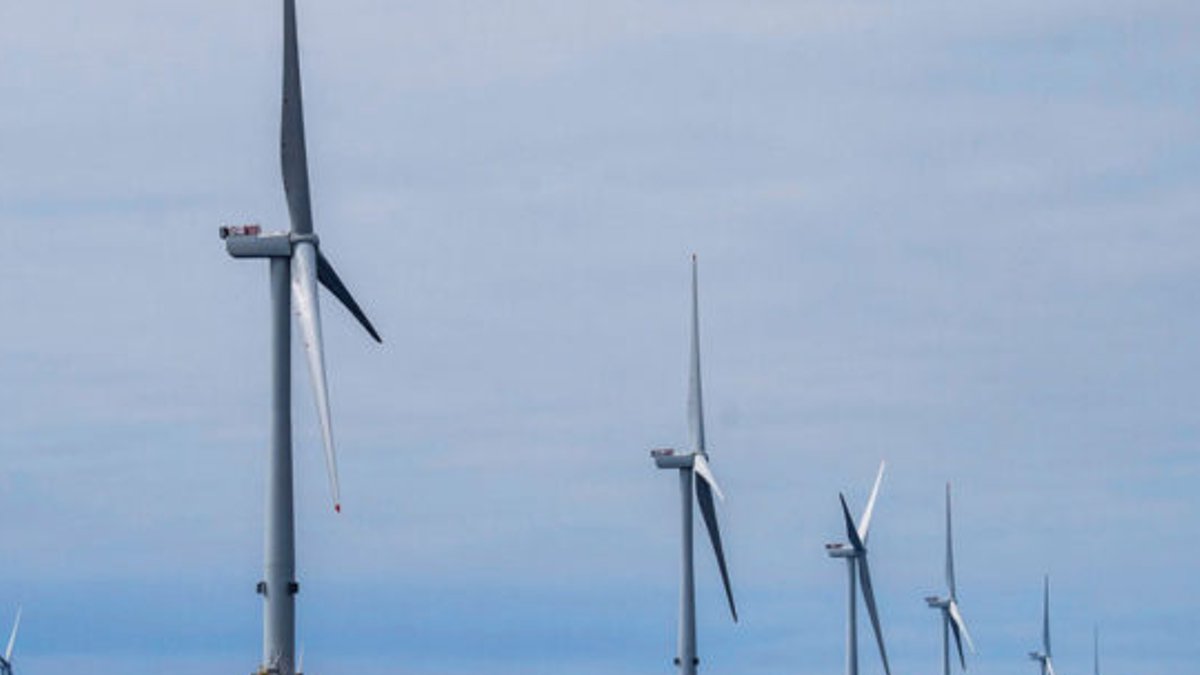
The Hamburg Declaration, signed in January 2026, sought to establish the North Sea as a 100 GW offshore wind hub. Yet, the abrupt closure of the Strait of Hormuz redirected the initiative from a long-term environmental aim to a pressing national survival imperative.
With governments speeding up auctions and private investors struggling to keep up, the financial sector is confronting a harsh truth: the existing regulatory and financial systems are being pushed to their limits by a rapid implementation pace they were never built to accommodate. Arif Gasilov, a partner at the ESG and sustainability consulting firm Gasilov Group, emphasizes that the financial framework is not a distant 2050 planning exercise but an immediate necessity for governments to expedite auctions and for private capital to follow suit.
François Le Scornet, President and Senior Consultant at Carbonexit Consulting, asserts that the crisis has raised offshore wind from a mere climate initiative to a critical industrial security strategy. He explains, ‘From a European perspective, imported fossil fuels represent a strategic vulnerability.’ Le Scornet further highlights, ‘North Sea electricity is undoubtedly a strategic asset in geopolitical terms.’
Acceleration and Challenges
The acceleration is visible in the numbers, with Germany announcing an additional 12 GW of auction volumes in direct response to the supply shock, and the UK bringing forward its AR8 offshore auction to July 2026. This ‘Hormuz premium’ is forcing fund managers to re-evaluate risk-return profiles for assets deployed in months rather than years.
While the 100 GW goal is ambitious, the financial tools to achieve it remain under discussion. Le Scornet cautions that the target is only realistic if governments stop assuming private capital will bear the burden alone. Europe needs approximately 15 GW annually from 2031 to 2040, with at least 10 GW per year requiring two-way price guarantee contracts, known as Contracts for Difference (CfDs).
These contracts set a fixed price, shielding developers from market downturns and consumers from excessive costs during price surges. However, the absence of standardized contract templates for hybrid-specific risks remains a hurdle, forcing institutional investors to manage 25-year currency volatility on a case-by-case basis.
Le Scornet points out that the real challenge is not just capital, but risk allocation, particularly concerning grid investment, congestion, curtailment, and price gap compensation. The differing policies between the UK and EU remain a major concern for investors, making public risk mitigation essential to achieving the 100 GW target.
The European Investment Bank (EIB) and the UK National Wealth Fund play key roles in providing public risk mitigation, making early-stage, high-risk projects viable for private investment. Without such support, the 100 GW target may appear overly optimistic, Le Scornet warns.
Green Bonds and Financing
The final pillar of the North Sea Hub is the capital itself, largely raised through green bonds. However, the pricing of these instruments reveals a complex situation, with the concept of the ‘greenium’ – the slightly lower interest rate investors accept in exchange for a green label – playing a significant role.
Hilda Afeku-Amenyo, a researcher at Montclair State University, notes that the greenium for supranational bonds in advanced economies is approximately two basis points. The demand for green bonds, rather than climate impact alone, continues to drive the corporate green premium, which currently sits between three and eight basis points.
A significant hurdle for the formal implementation of the Hamburg Declaration is Taxonomy alignment, with only nine percent of EU green bonds currently meeting the strict criteria of the EU Taxonomy. The sectoral concentration of corporate green bonds, with 79 percent coming from utility companies, despite utilities representing only five percent of the EU’s economic output, also raises concerns.
However, data reveals a surprising trend: there is no measurable pricing advantage for bonds labelled under the EuGBS as opposed to those aligned with the older ICMA standards.
The standard is moving faster than the pooling of bonds, leaving the prospect of a unified ‘North Sea Green Bond’ as one of the most intriguing unresolved questions in European finance. As the industry continues to evolve, the need for a unified authority to handle consenting and dispute resolution across all EEZs, a template for cross-border contracts, and a basin-wide methodology for pricing biodiversity becomes increasingly pressing.
The lack of standardised contract templates for hybrid assets like LionLink, connecting the UK and the Netherlands, remains a significant challenge, with investors facing a dual layer of complexity: handling different subsidy regimes and market coupling rules while managing significant currency risk. Developers are forced to structure Power Purchase Agreements (PPAs) across a GBP/EUR split, with hedging costs eating into the already thin profit margins of offshore wind.
Structural Shifts
A basin-wide methodology for pricing biodiversity is critical to turning environmental protection into a predictable financial metric. This methodology would enable developers to quantify the environmental impact of their projects and factor it into their financial models, reducing the risk of permitting delays and regulatory disputes.


