


Deep Tech Founders Urged to Prioritise Business Basics
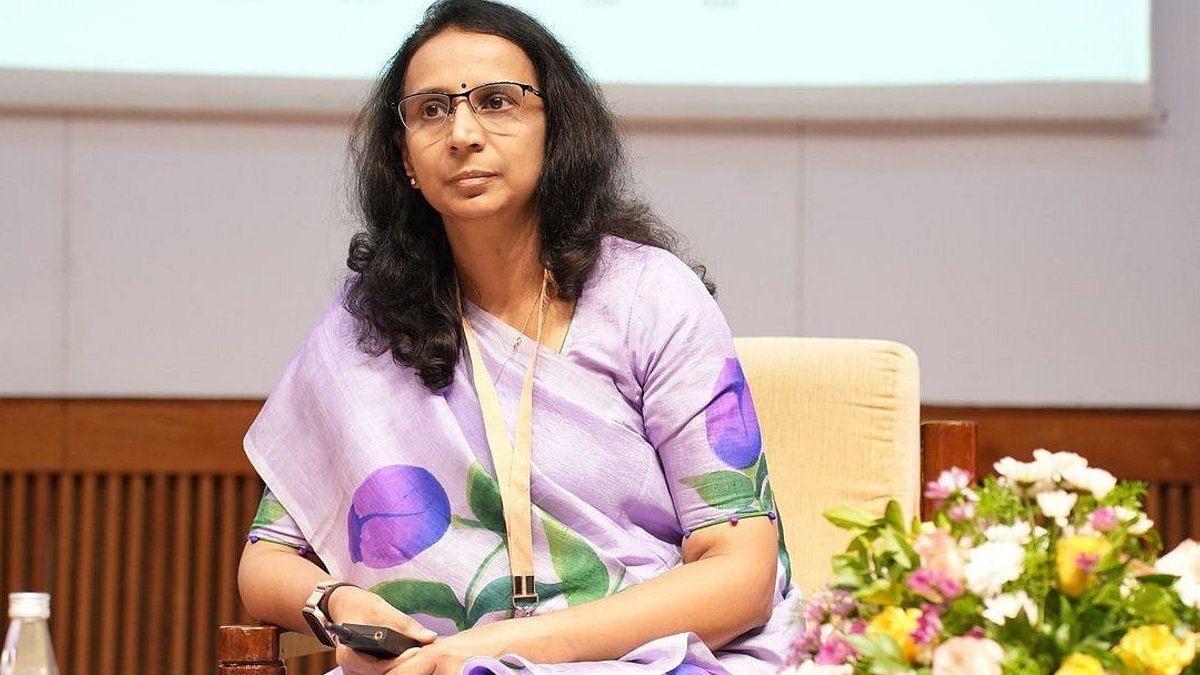
India’s deep tech surge marks a structural shift, but the ecosystem is still in its early stages. Strong technology alone isn’t enough; startups must prioritise market fit, pricing, and sustainable revenue models. Long-term success will depend on patient capital, easier business conditions, and stronger industry-academia collaboration.
Founders need to prioritize market fundamentals over pure innovation
Srivardhini K Jha, Chairperson of NSRCEL (Nadathur S. Raghavan Centre for Entrepreneurial Learning) at IIM Bangalore, says deep tech startups are often losing their edge because they focus too much on what they can build and not enough on who will buy it. According to Jha, one of the key constraints facing deep tech startups is a lack of business orientation.
While founders possess strong technological expertise, they often underemphasise core market fundamentals such as pricing, demand, distribution, and sustainable revenue models, she noted. Technology by itself is not enough; it must translate into a sustainable, scalable business. If founders are addressing uniquely Indian challenges, building from India offers a clear advantage in terms of context and proximity. For globally relevant problems, on the other hand, geography is increasingly less of a constraint.
Jha explains that India’s startup setting has evolved through distinct waves. The first wave, in the mid-2000s, saw companies like Flipkart and Ola build by adapting proven global business models to Indian conditions. The second wave, post-2012, was driven by rapid internet and smartphone penetration, significantly accelerated by Reliance Jio. This phase enabled the rise of large-scale digital platforms and e-commerce businesses, again relying primarily on existing technologies rather than creating new ones.
Related: Infosys Public Services CEO Unreachable After Nepal Floods
Today, that opportunity space is largely saturated. Much of the “low-hanging fruit” has already been captured. As a result, founders are increasingly being pushed to go deeper tackling more complex, technology-led problems. This is where deep tech emerges as a natural next phase. Three structural drivers underpin this shift. First, the saturation of earlier models is forcing innovation beyond existing technological frameworks. Second, post-pandemic geopolitical shifts have highlighted the importance of technological self-reliance. Third, the entrepreneurial ecosystem itself has matured, with founders now aspiring to build at the frontiers of innovation rather than replicate existing models.
Observers are also seeing a new wave of second-time founders, such as Deepinder Goyal, exploring more ambitious, “moonshot” ideas. Deep tech, therefore, is not a passing trend; it represents a structural shift. That said, the space is still at an early stage and far from fully mature.
Retaining deep tech talent
Jha points out that India’s strongest deep tech potential lies in areas where it has built long-term institutional and industrial capabilities. Space technology is a clear example, driven by decades of investment and expertise from ISRO. Similarly, biotechnology benefits from a strong foundation in chemistry and pharmaceuticals, with companies like Biocon demonstrating global competitiveness. To sustain and accelerate this trend, the focus must be on reducing structural friction making it significantly easier for founders to access grants, capital, and high-quality research infrastructure. If these pathways remain cumbersome, entrepreneurs will inevitably look to more enabling ecosystems abroad.

Infosys Public Services CEO Unreachable After Nepal Floods


