


Nvidia posts 106% revenue rise CEO defends AI
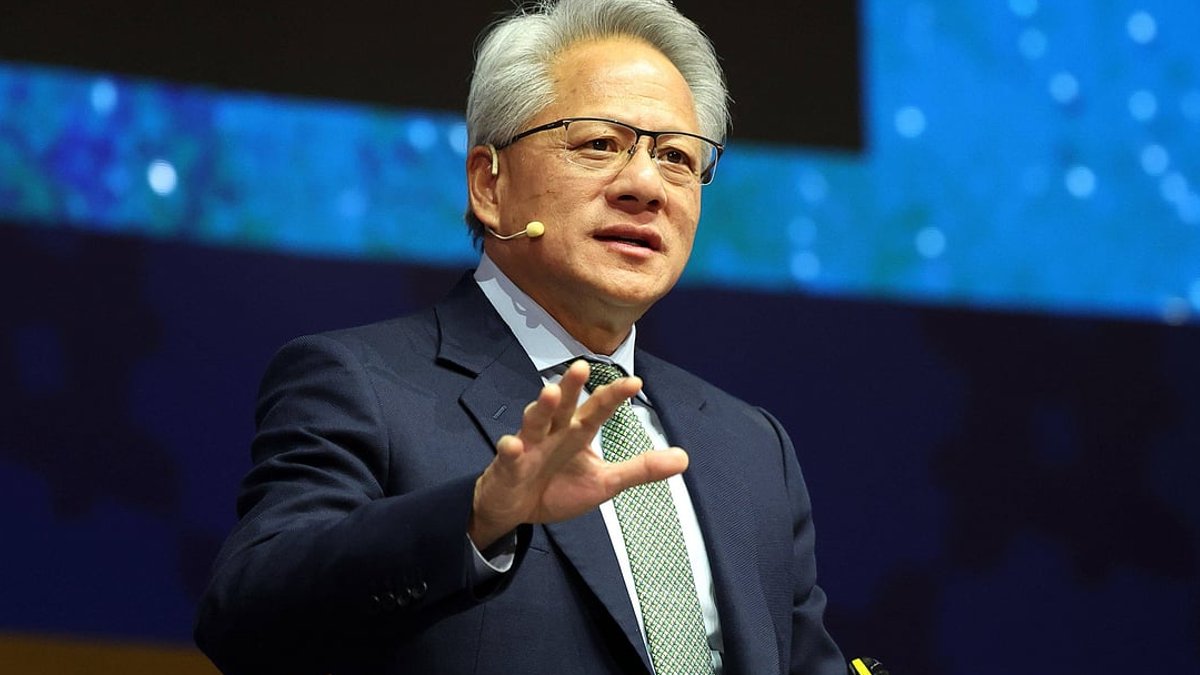
Nvidia reported second‑quarter fiscal 2027 revenue of $96.2 billion, a 106% increase from a year earlier, as demand for artificial intelligence computing kept rising.
Data‑centre sales lift earnings to new heights
The chipmaker’s data‑centre segment posted $89 billion in revenue, up 117% year over year and 18% from the prior quarter. That segment remains the largest source of cash flow for the business.
Gross margin on a GAAP basis reached 75%, modestly higher than the 72.4% recorded a year ago. Net income more than doubled to $59.7 billion, while diluted earnings per share climbed 128% to $2.46.
In the quarter, the firm returned roughly $26 billion to shareholders through share repurchases and dividends. About $99 billion of its authorized buy‑back program remained available at quarter‑end.
The earnings release highlighted that the data‑centre business not only dominates total revenue but also fuels the company’s ability to generate free cash flow, which in turn powers the sizable share‑repurchase authority. By retaining a substantial portion of that authorization, Nvidia signals confidence in its balance sheet while preserving flexibility for future capital‑return initiatives.
Analysts noted that the margin expansion, even if modest, reflects the premium pricing power Nvidia enjoys on its high‑performance GPUs and the scaling efficiencies that come from serving a rapidly expanding AI compute market. The combination of higher‑margin sales and a cash‑rich balance sheet creates a feedback loop that supports continued investment in product development and strategic financing activities.
CEO defends AI‑focused financing
Founder and chief executive Jensen Huang said the pace of AI demand now exceeds the early build‑out phase. “AI has reached its inflection point. It’s doing useful work. Its tokens are productive and profitable. Now, compute is revenue,” he told analysts.
Huang noted a “golden age” of new AI labs and startups, with multiple frontier groups scaling in parallel and an open‑model ecosystem gaining traction worldwide. He argued that the chipmaker’s financial backing of AI firms carries limited risk because the computing assets can be reassigned across customers and workloads.
Related: India Leads in Social Project Funding Models
“The money we’ve invested is going to generate tremendous returns,” Huang added. “I think the risk is low.”
From a practical standpoint, this approach could give smaller AI developers access to high‑end hardware they could not otherwise afford, potentially speeding up product launches and widening the pool of innovators that can compete in the market.
Huang also emphasized that many AI companies lack the credit history to raise capital on favorable terms, positioning Nvidia as a bridge between capital markets and emerging AI workloads. By providing compute capacity through financing arrangements, the company not only secures future demand for its silicon but also embeds itself deeper into the supply chain of next‑generation AI services.
Chief financial officer Colette Kress projected fiscal 2028 revenue growth of about 70%, well above analysts’ 44% estimate. The outlook assumes no data‑centre compute revenue from China and acknowledges ongoing supply constraints.
Kress explained that the growth projection rests on customer forecasts that anticipate a doubling of compute spend in the coming year. She showed that the company’s supply‑chain challenges remain a factor, but that the firm’s production ramp‑up plans are designed to meet the accelerating demand without compromising product quality.
Shares rose roughly 4% in after‑hours trading following the release, adding to a 13% gain recorded earlier in the day. The market’s reaction suggests cautious optimism about the sustainability of the broader AI trade.
The stock’s movement reflects investors’ assessment that Nvidia’s blend of rapid top‑line expansion, robust profitability, and a proactive financing strategy for AI startups creates a defensible moat. While the broader AI sector still grapples with uncertainties around demand durability, the company’s ability to convert compute capacity into recurring revenue streams appears to reassure the market.

India Leads in Social Project Funding Models


