


Danieli equipment boosts efficiency at Serbian steel plant
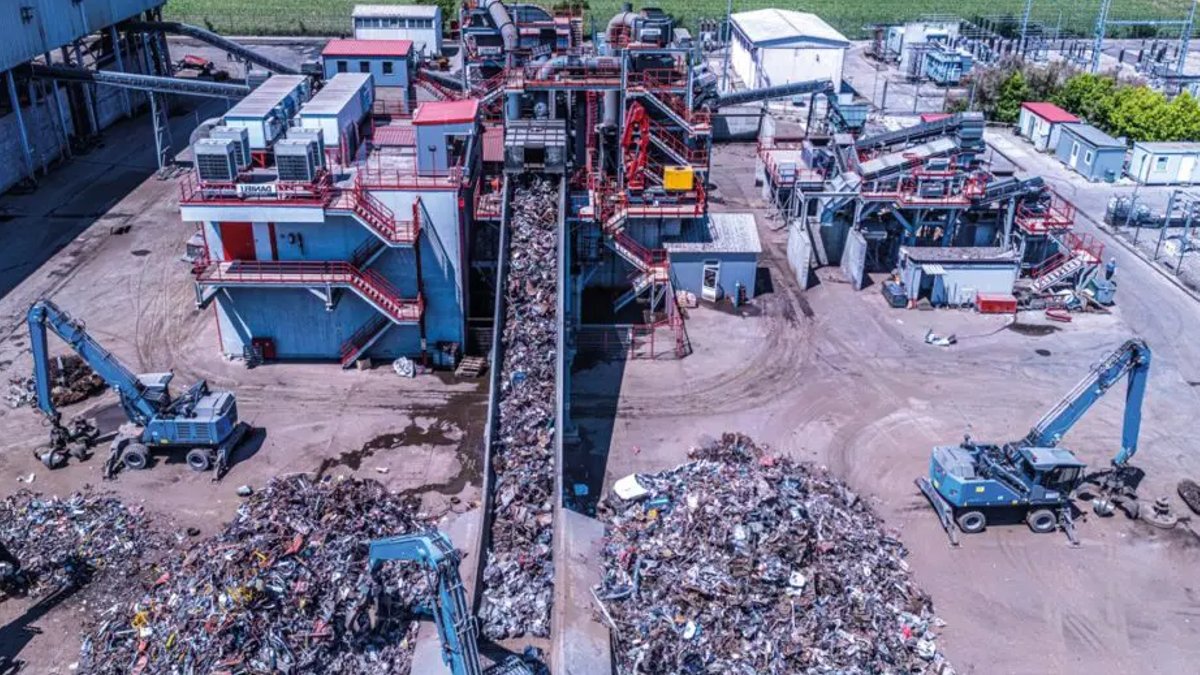
Steelmakers are turning scrap yards into performance drivers as they seek higher efficiency, lower emissions and steadier raw-material supply, and the Italian supplier Danieli is at the centre of that shift.
Metalfer’s Serbian hub
Metalfer, a London-origin group active in the Balkans since 2002, built a fully integrated steel complex in Sremska Mitrovica that runs from waste-metal preparation to finished coils. The company’s long-standing presence in the region gave it deep insight into local supply chains, which helped shape the layout of the new plant.
The complex includes a recycling facility supplied by Danieli Centro Recycling, designed to treat 250 000 tonnes of shredded material each year. This capacity matches the bulk of scrap generated by nearby manufacturers, allowing the site to operate largely on its own recycled feedstock.
A heavy-duty conveyor feeds a high-power shredder equipped with a patented inverter drive, which the supplier says can cut energy use by up to fifteen percent. The drive’s variable-frequency control adjusts motor speed in real time, further smoothing electricity demand during peak periods.
Downstream, a ferrous-separation line extracts non-ferrous contaminants, while a flexible circuit recovers high-purity Zorba alloy. The separation equipment uses magnetic and eddy-current technologies that sort metals with a precision previously achievable only in dedicated processing plants.
By handling material in-house, Metalfer can check quality before it reaches the furnace, a change that the company links to steadier melt-shop operation. Continuous monitoring of composition reduces the need for costly corrective actions later in the production cycle.
President Branko Zečević reported that furnace stability improved and energy draw fell after the upgrade. He noted that the more uniform feed reduced temperature fluctuations, which in turn lowered the amount of fuel required to maintain optimal melting conditions.
He added that productivity rose and product consistency sharpened, with shredded input now making up roughly fifty to sixty percent of each charge. The higher proportion of recycled input also allowed the mill to meet a larger share of its sustainability targets without sacrificing output volume.
The denser feed allows fewer bucket loads, speeding the charge cycle and simplifying handling. Operators can load larger batches in a single pass, which shortens the time workers spend at the furnace entrance.
Metalfer’s endless-rolling mill, installed in 2018, complements the recycling line by enabling continuous production with less downtime. The mill’s automated tension-control system keeps coil dimensions within tight tolerances, further enhancing overall product quality.
“The biggest advantage is integration,” Zečević said, noting that a single supplier for multiple stages creates a seamless link between waste-metal preparation and rolling. He emphasized that this cohesion reduces hand-off errors and improves communication across the plant’s departments.
Aza’s Chilean mini-mill upgrade
Aza Acero Sostenible, a long-standing steel producer in Chile, operates a mini-mill near Santiago that relies almost entirely on recycled input. The firm’s commitment to circular-economy principles has driven it to seek the most efficient scrap-processing technology available.
The company recently commissioned a Danieli Centro Recycling plant. The plant features a 4 000-hp shredder equipped with an inverter drive system designed to reduce energy consumption. The plant also includes a complete ferrous separation line and a flexible system for recovering non-ferrous materials, producing high-purity Zorba.
“We have recently commissioned a new shredding plant designed to efficiently process scrap and improve metal yield in our steel mill,” says a representative at Aza. The integration of shredded scrap has delivered tangible results. “The performance has been very satisfactory,” the representative explains. “We have met the expectations outlined in the technical study and, in some cases, we have exceeded them.”
When the feed is uniform, furnace operators can maintain more stable temperatures, which in turn reduces fuel use and emissions.


