


AI tool helps recycling plants spot waste issues faster
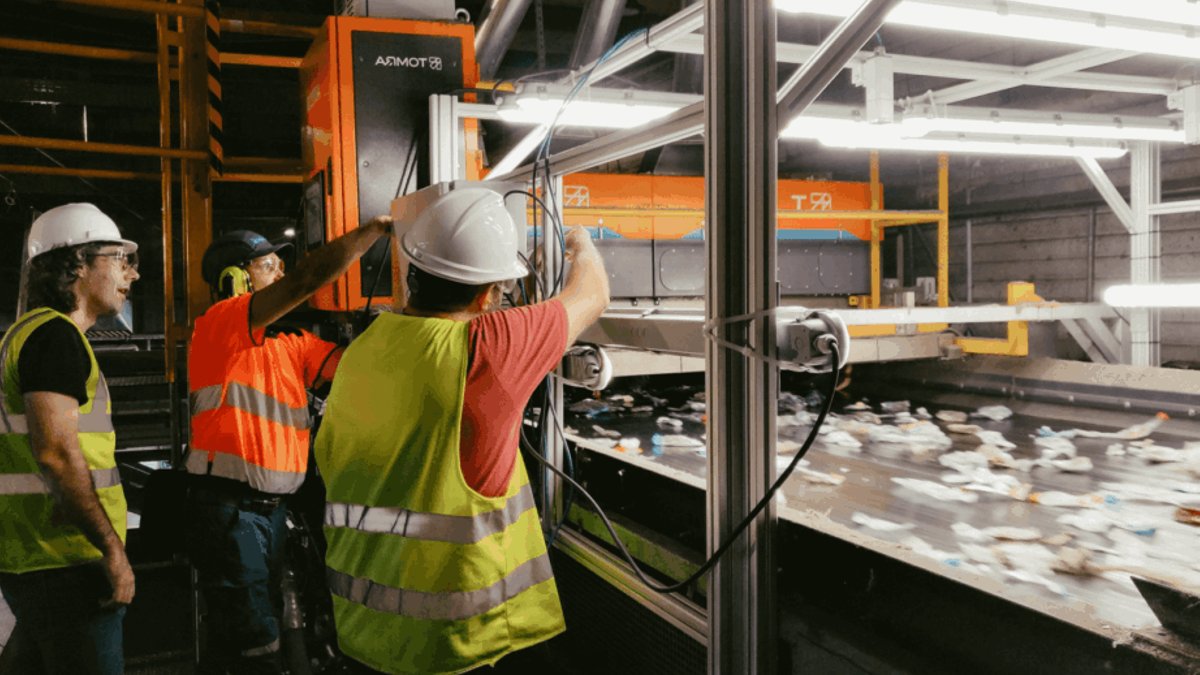
A Belgian AI firm has developed a system enabling recycling plants to analyze operational data through natural language queries, with support from a Norwegian sorting technology provider.
The platform, developed by PolyPerception, targets material recovery facilities processing plastics. It enhances existing camera-based monitoring by adding AI, letting operators query performance without engaging with dashboards or spreadsheets. The system tracks materials across sorting lines and delivers immediate responses to operational questions. For instance, an operator might ask how a recent change influenced recovery rates, and the AI would process production data to provide evidence-based answers.
Founded in Antwerp in 2021, PolyPerception has collaborated with Tomra Recycling since 2022. Their partnership expanded in May 2026 when Tomra acquired a 51% stake. The new platform now integrates with Tomra’s GainNext deep learning system, expanding its functionality.
A standout capability is detecting minor shifts in waste composition that might otherwise remain hidden. The system spotted a slow rise in contamination within a polypropylene and polyethylene stream just 45 minutes after it began. Such early warnings allow operators to correct problems before they degrade output quality or reduce material recovery.
The platform also includes tools to search for visually similar items, helping operators identify and monitor hazardous objects like batteries or electronic cigarettes. Users can set alerts for specific products, such as refuse bags or diapers, to track fire risks or other dangers.
PolyPerception promotes a phased adoption model, first comparing its data with traditional monitoring to reveal potential losses in residual streams. Clients often observe measurable improvements within the first month of use.
Though still in development, the technology signals progress toward broader industry changes. Lars Enge, Tomra Recycling’s executive vice president, stated that deep learning now handles tasks previously beyond automation, including sorting food-grade plastics for high-quality recyclates.
Enge predicts that in the next ten years, the recycling sector will complete its shift from waste management to real resource recovery, with AI serving as a central intelligence layer. This transformation will enable materials to be tracked from input to output, enhancing transparency and traceability in secondary raw materials. Recyclers will base decisions on continuous data, minimizing operational uncertainty and improving predictability.


