


Krakow Shooting Signals Rise in Nihilistic Extremism
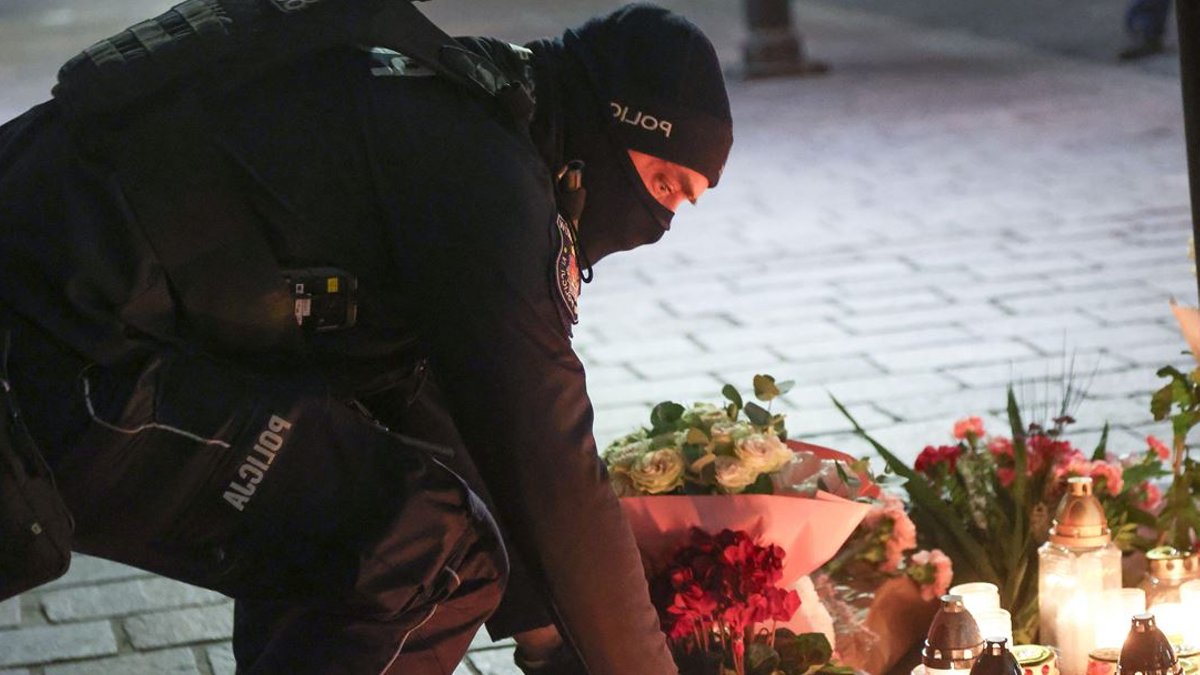
In Krakow’s central square, a 24-year-old Polish gunman fatally shot six people last Saturday, prompting an investigation into a terrorist incident with possible links to far-right ideology, as authorities seek to understand the suspect’s motives.
Perpetrators today tend to be younger, socially disconnected, and less tied to organized political movements. Instead, acts of nihilistic extremism, unstructured, devoid of formal ideology, and fueled by hatred of humanity and a craving for disorder, are spreading throughout the continent.
The rise of nihilistic extremism
Since 2024, the number of nihilistic extremist violence incidents in the EU has increased by over five times, according to data from the Polarization & Extremism Research & Innovation Lab (PERIL) at American University. A 2025 report from the EU Counter-Terrorism Coordinator highlights its rapid expansion online, primarily among minors and young adults.
Many attackers are radicalized online but have little direct engagement with political groups or individuals. This makes it harder for security services to track suspects and intervene before attacks, according to Thomas Renard, director of the International Centre for Counter-Terrorism.
The Krakow shooter aligns with this pattern. Investigators say he explored materials related to Anders Behring Breivik, the Norwegian mass murderer responsible for 77 deaths in 2011, according to Poland’s justice ministry. He also engaged with far-right extremist forums and showed interest in true crime content, according to Daniela Pisoiu, a lead analyst at the Austrian Institute for International Affairs.
People are thinking about the echo their actions are having on social media, rather than the political effects.”
Trends in Youth Radicalization
130 terrorism suspects arrested across the EU were aged 18 or younger in 2025, according to Europol. The average age of all suspects was 27. Interpol links this rise to digital radicalization, social isolation, and manipulation. Social media, encrypted messaging, and online communities serve as ecosystems where this radicalization occurs.
Mental health and online tools
The growing use of online tools like AI chatbots is also a threat, says Renard. Attackers are using large language models to plan attacks, potentially making lone-actor violence more lethal.
However, Stefan Marschall, a political scientist at HHU Dusseldorf, argues that the root causes of radicalization go beyond digitization. He calls for an all-of-society approach, addressing dissatisfaction with society, including parts not recognized by the political system. “More security and surveillance,” he says, “only address the results and not the reasons.”


