


Five EU nations plan to send migrants to Rwanda
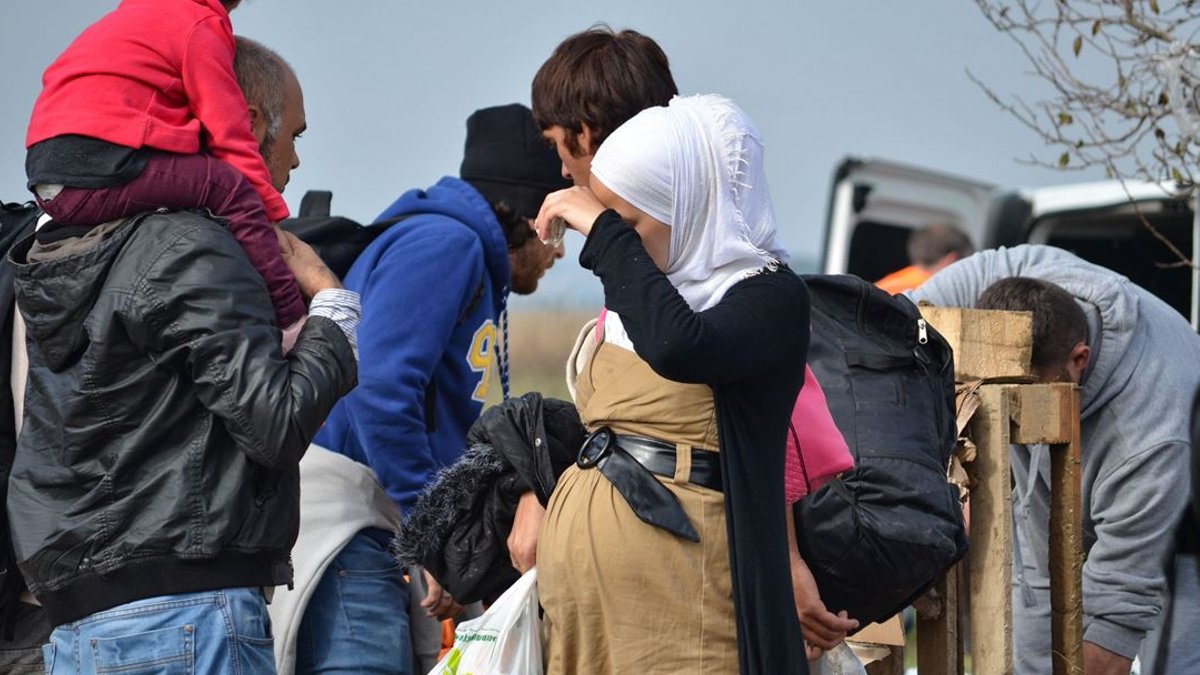
Next year, Rwanda will receive the first group of irregular migrants deported from five EU nations. This pilot initiative tests a major revision of the EU’s migration policies. Officials from Denmark, Austria, Germany, the Netherlands, and Greece made this announcement in Vienna. They gathered there for the annual migration conference with top politicians.
Political rhetoric and reality on the ground
Despite the political rhetoric, irregular arrivals to the bloc continued to decline in 2026, with roughly 37% fewer recorded in the first seven months of the year than during the same period in 2025, according to a recent analysis by the Mixed Migration Centre, an NGO.
The plan was expected since the EU pushed to set up return hubs in non-EU countries — a system that would let member states send rejected asylum seekers to detention centers in partner countries, regardless of whether migrants have any ties to the country. Since then, the question has been which country would agree to host irregular migrants, with Rwanda, Uganda and Uzbekistan among the top candidates. Kigali is set to be the first to sign a partnership agreement with Denmark as early as next week.
Davide Colombi, a researcher at CEPS, pointed out that many questions remain unanswered, including the operation, budget, and legal framework of the return hubs, as well as the scope of the independent monitoring mechanism and the division of legal responsibilities, saying “we still don’t know who will operate them, the overall budget, the type of legal instrument, the scope and mandate of the independent monitoring mechanism, the remedies available to individuals, the division of legal responsibilities following transfer, and what the ‘other areas of common interest’ the five EU Member States and Rwanda are working on entail”.
Read Also: Insurers discuss unlocking capital for green goals
Scope and capacity
At least initially, the hub will take in no more than a hundred migrants, the group of five countries said on Monday. Asked whether such a modest figure justified the scale of the operation, Frederiksen made clear that she viewed the site more as a deterrent than a solution in itself.
However, migration experts argue that the prospect of being sent to a detention center does not deter people from seeking refuge, and Colombi stated that “there is no robust evidence showing that stricter migration policy or more deportations have an impact on people’s decision-making on migration journeys”, adding that “this is one of the key ideas behind recent EU migration legal and policy reforms, but it really overplays the degree of awareness of EU policies abroad and deliberately ignores that it directly produces more danger for the people who decide to move”.
Colombi argued that the EU’s migration policy overestimates the impact of its policies on migrants’ decisions, and that it ignores the dangers faced by those who migrate, saying “this is one of the key ideas behind recent EU migration legal and policy reforms, but it really overplays the degree of awareness of EU policies abroad and deliberately ignores that it directly produces more danger for the people who decide to move”.
Legal and operational challenges
In 2018, the European Commission rejected returning migrants to countries with no ties to them. The move risked violating the principle of non-refoulement. It warned that ‘the risk of infringing non-refoulement is high.’
Migrants will initially be housed in open facilities. They will be free to decide whether to stay in Rwanda, return to their home countries or to another country where they can legally stay. “Under this partnership, Rwanda will provide a second chance to people who no longer have the legal right to remain in the partner countries,” Rwanda’s Interior Minister Vincent Biruta told reporters on Monday.
Read Also: Ex Alameda CEO to be released early
Instead, he said, “we offer them a second chance.” But human rights groups are adamant that such framing deliberately hides the violence of being uprooted and sent to a country with which they have no connection. “Some Member States are rebranding these “hubs” as ‘welcome centres’ or ‘opportunities’ for people on the move,” read a joint letter signed by 47 human rights, civil society and trade union organizations.
Historical context and external actors
It wouldn’t be the first time that Rwanda has agreed to host migrants from Europe. In 2022, the U.K. and Rwanda announced an “asylum partnership arrangement” that would have allowed London to send asylum seekers to the African nation. The deal famously collapsed in 2024 amid repeated legal challenges, including from the European Court of Human Rights, and a change in government.
After the announcement, the International Organization for Migration (IOM) received a request from Rwanda. The request was for ‘operational support’ regarding EU return hubs. The IOM said it could help, with conditions. It stressed that its mandate and international standards can be upheld.
The U.N. Refugee Agency (UNHCR) also appears to be involved. Frontex, the bloc’s border agency, remains outside the plan, at least for now. For experts like Colombi, one of the most interesting questions will be about independent monitoring. “It remains unclear who would conduct this monitoring, whether it would cover people’s actual living conditions and fundamental rights, and what powers it would have to address violations,” he said.


