


French car factory diversifies into drone production, sparking debate
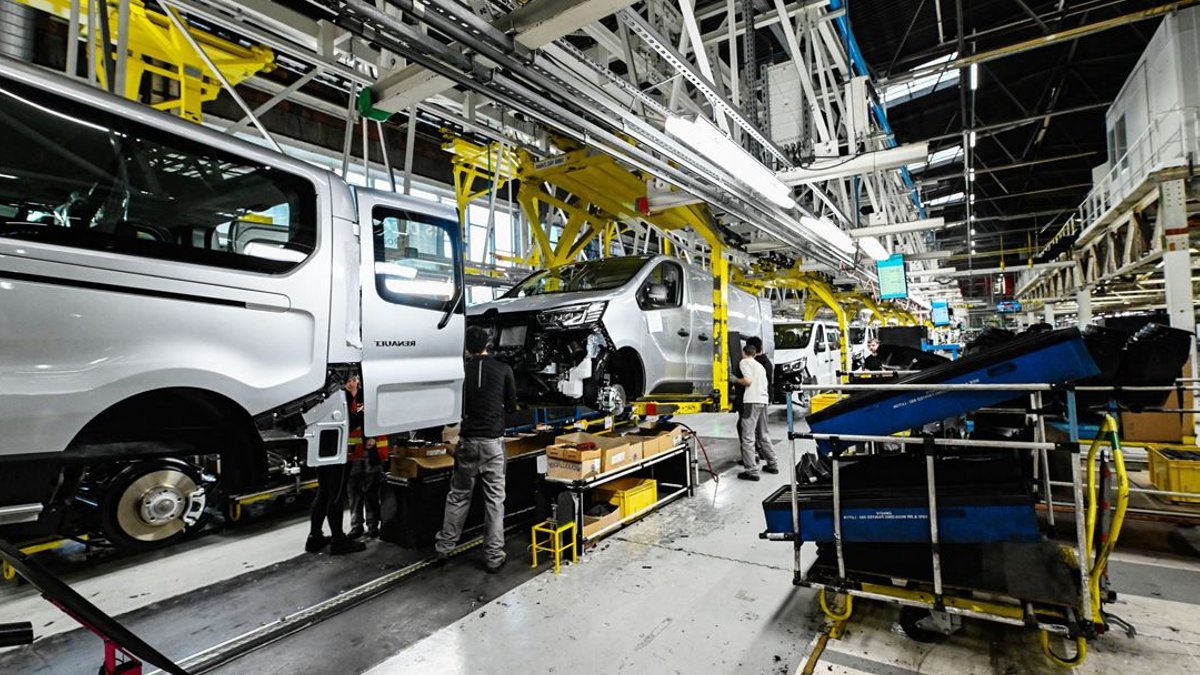
The Renault factory in Le Mans, France, has been central to the city’s identity for over a century, manufacturing car chassis since 1920. Now, it is diversifying to produce military drones alongside its traditional automotive output.
This shift has sparked debate among workers and locals, balancing the need for stable employment against concerns about contributing to the arms industry. France’s automotive sector has declined, losing a third of its jobs between 2010 and 2023, with another 75,000 expected to disappear by 2035.
A divided workforce
The Renault factory in Le Mans once employed over 10,000 workers, but that number has fallen to around 1,700. The new drone project, in partnership with Turgis Gaillard, will create 80 new jobs when fully operational in January.
Some workers view this as essential to securing their livelihoods. “What we want to make is cars, not drones,” said one worker finishing his shift. Like many of his colleagues, he asked not to be named, fearing repercussions for speaking openly about the project. Another worker, on his lunch break, was more pragmatic. “Be it Thales, Safran or Renault, it’s all the same. We might as well do it here,” he said, referring to two of France’s biggest defense companies and his own employer. Yet even he acknowledged some regret at the factory’s new direction. “We’d like it not to be the case, but this is the world we live in.”
The project aligns with France’s push for a “war economy,” championed by President Emmanuel Macron. The country’s military budget has doubled in the past decade, and the Ministry of the Armed Forces aims to accelerate rearmament and enhance domestic drone manufacturing.
Read Also: European Defense Firm THEON Expands Global Reach
For Renault, the financial risks are minimal. The Ministry of the Armed Forces funds the site’s conversion, and drones will be produced only on demand, eliminating the risk of unsold inventory.
A complicated history
Renault’s entry into defense manufacturing has historical precedent. During World War II, the company produced trucks and tanks for the Nazi Wehrmacht, leading to Allied bombings that killed hundreds, including workers. This history weighs on current employees, who fear becoming targets in international conflicts.
The Chorus drone, developed under the Le Pacte Drones Aériens Défense initiative, is designed for long-range and low-cost operations. The goal of the project, which aims to produce 600 drones a month, is “not to order hundreds of thousands” of them, but to design them in such a way that Renault might one day be able to produce them on its production lines at scale.
Patrick Pailloux, head of the Directorate General for Armament (DGA), has said that France will need “millions of drones” to survive a year of full-scale combat.
The project has divided trade unions. Some view it as a patriotic duty, while others oppose it on pacifist grounds. Arnauld Samson of the CFDT union acknowledges the financial interests but notes workers accepted the project on the condition that the drones leave the factory unarmed.
Read Also: Ireland Begins EU Council Presidency, Targets Budget
Le Mans’ transition reflects a broader shift across Europe. By 2027, Volkswagen’s factory in Osnabrück will produce air defense systems, and Forvia, a French auto parts supplier, plans to make interceptor drones. The European Commission recently approved the sale of Iveco’s defense business to Leonardo, Europe’s third-largest military manufacturer.
For Le Mans workers, the future is uncertain. While most still produce cars, the shift towards defense manufacturing is clear. As one long-time Renault employee stated, “I hope this production is only for dissuasion purposes,” he said, “but at the end of the day, we can’t depend on other countries [for security] any longer.”
Renault’s history with defense manufacturing adds complexity.
Centralized Arms Procurement Model Under Scrutiny
France’s centralized arms procurement system, managed by the Directorate General for Armament (DGA), has been criticized for stifling innovation. A French Senate report highlights that this model focuses investment on complex, high-tech drone projects, neglecting cheaper, expendable alternatives proven effective in Ukraine.


