


Canada and EU seek mineral partnership
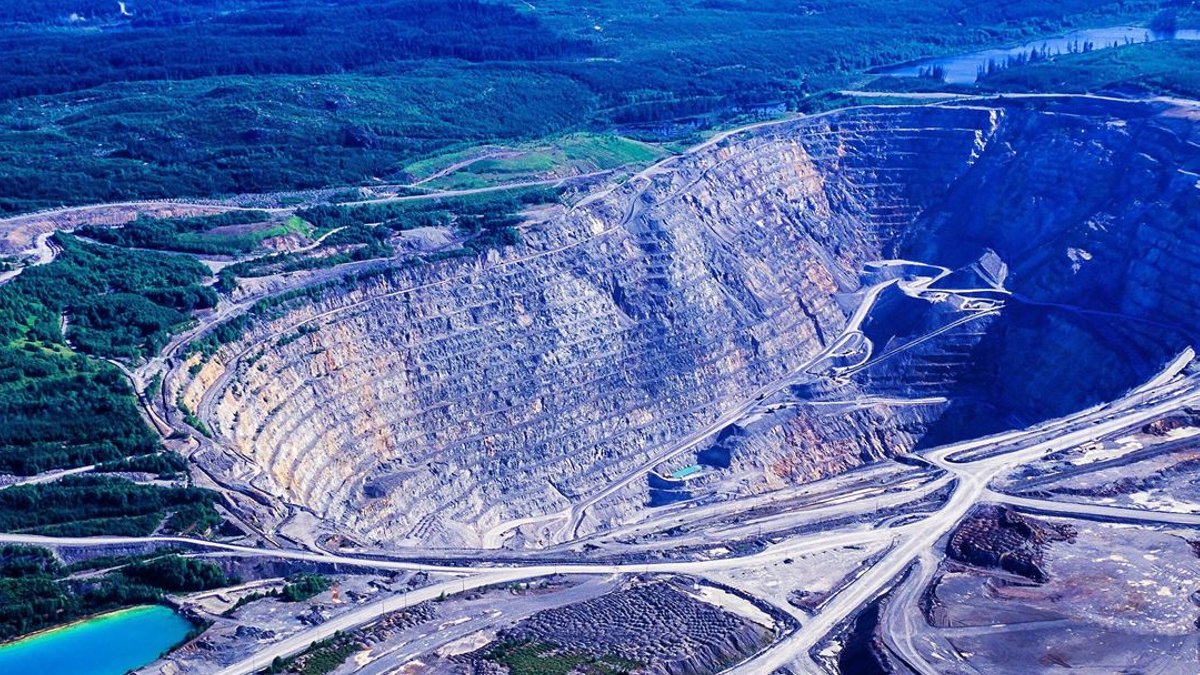
Canada and the European Union are seeking to strengthen their ties, with a focus on critical minerals. The EU’s hunger for these minerals could bring investment to Canada’s industrial heartland, according to Ronald Ewasiuk, mayor of Bruderheim, a rural town east of Edmonton.
Ewasiuk hopes a new processing plant in his town will attract European investment, creating opportunities for Canada. He points to a new hydrometallurgical facility being developed to process mineral concentrates from a mine in the Northwest Territories.
Critical Minerals and EU Dependency
Critical raw materials are essential to Europe’s economy, underpinning electric vehicles, renewable energy, digital infrastructure, and defense. The EU remains heavily dependent on imports, particularly from China.
The EU’s critical minerals policy, adopted in 2024, aims to reduce its dependency on Beijing. The European Court of Auditors warned that the EU risks falling short, with 10 of 26 critical raw materials fully imported and none of the rare earths used in the EU processed domestically.
Canada, a mining powerhouse, is well-placed to plug this gap, with 34 critical minerals, including significant quantities of uranium, nickel, cobalt, and copper. The country’s mineral industry is closely integrated with the United States, but this relationship has become more uncertain amid recent trade conflicts.
Cooperation and Investment
The EU and Canada aim to turn years of memorandums and strategic partnerships into actual investment. The two sides need a shift as China tightens its grip on mineral supply chains and Washington’s tariffs strain Canada’s reliance on the U.S. market.
Ollie Sheldrick of Clean Energy Canada notes that “critical minerals are very much at the heart of the current conversations between the EU and Canada.” He believes a partnership with Canada is a logical move for the EU, given its lack of domestic raw materials.
Lawrence Herman, senior fellow at the C.D. Howe Institute, agrees, stating that “Trump’s aggressive, coercive trade policies have made it clear that like-minded countries like Canada, the EU, and member states have to work together.” He sees a strong foundation for a separate deal on critical minerals between Canada and Europe.
Related Post: Canada Rejects Full Trade Deal With China
Canada is in dire need of investment to develop its mineral resources and build processing facilities. The country has announced C$2bn for its Critical Minerals Sovereign Fund over the next five years, alongside C$371m for northern infrastructure. Public funding alone cannot meet the sector’s needs.
Access to capital is a top risk for the Canadian mining industry, according to John Steen, Director of the Bradshaw Research Institute for Minerals and Mining. He believes having a friendly and aligned partner like the EU would be very positive, enabling Canadian producers to move beyond extraction into refining and recycling.
The European Investment Bank is expected to ink a framework financing agreement with Ottawa at a summit in Montreal, which could pave the way for European financing of critical minerals projects. Canada’s restrictions on investment by Chinese state-backed companies could create further opportunities for European firms.
Technology is another area for cooperation, with the Canadian mining industry in need of technological know-how to develop. Some EU countries are making great progress in developing technologies, which could be shared with Canada.
The EU and Canada have established a framework for cooperation, but these strategic partnerships have yet to turn into significant investment. The EIB has applied for an exemption from foreign bank status in Canada, which could facilitate European financing of critical minerals projects.
For cooperation to succeed, analysts say both sides must agree on priorities, including a clear shared vision. The EU and Canada need to establish which minerals should take priority, with 24 of Canada’s 34 critical minerals considered critical by the EU.
Marilyn Spink, executive director of the Canadian Critical Minerals and Materials Alliance, notes that investors need clarity on which minerals the EU wants. A strategic plan for the Canada-EU partnership from mining to recycling is necessary to ensure investors understand what they need to be looking for.
The outcome of the Montreal summit will be significant in determining the future of EU-Canada cooperation on critical minerals. The summit is an opportunity for both sides to make progress, and the result will impact the future of their partnership.


